
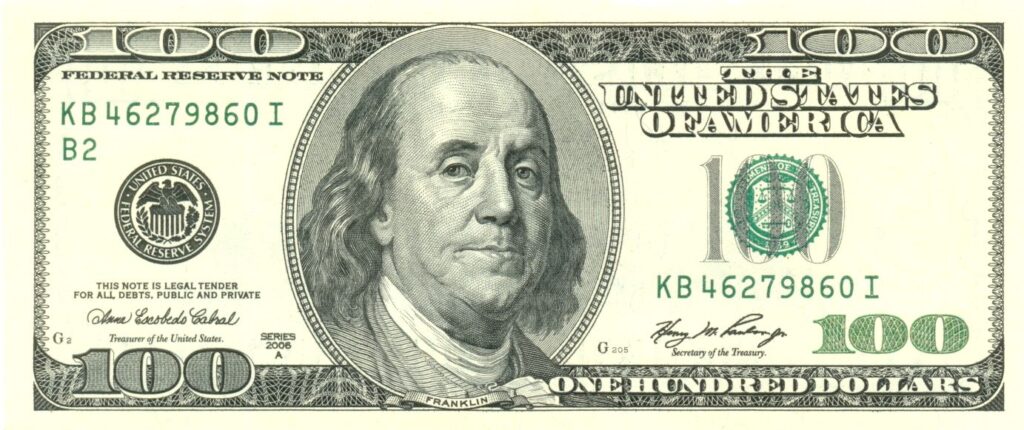
Before I heard about first principle from Elon Musk, I had always approached problem solving by breaking down puzzles by defining them and further seeking out definition of all components that makes up the puzzle in order to figure out the solution. While applying first principle unconsciously I converted from being a Christian to becoming Agnostic.
Deploying same principle, we will equally figure out what Money is, hopefully we will find out the easiest means of amassing wealth or likely discover something beyond amassing wealth.
The History of Money
From Barter to Digital Currencies:
The concept of money has evolved dramatically over millennia, shaped by human needs, societal structures, and technological advancements. What began as a simple means of exchange has transformed into a complex system underpinning global economies. Below is a concise history of money and how its concept developed.
The Barter System: The Precursor to Money
Before money existed, humans relied on bartering—directly trading goods and services. A farmer might exchange grain for tools, or a hunter might trade meat for clothing. However, bartering had significant limitations: it required a “double coincidence of wants,” meaning both parties needed to desire what the other offered. This inefficiency, along with issues of valuation and storage, spurred the need for a more practical system.
Early Forms of Money: Commodities (Pre-3000 BCE)
To overcome bartering’s flaws, early societies used commodities as a medium of exchange. Around 7000 BCE, goods like livestock, grains, shells, and precious stones served as proto-money. These items were widely valued, portable, and durable, making them suitable for trade. For example:
Cowrie shells were used in ancient China, Africa, and India due to their scarcity and aesthetic appeal.
Grain and cattle served as currency in agricultural societies like Mesopotamia, where standardized measures emerged.
This shift marked the first step toward a standardized medium of exchange, laying the groundwork for money.
The Emergence of Metal Money (3000 BCE–600 BCE)
As civilizations grew, metals like gold, silver, and copper became preferred mediums due to their durability, divisibility, and intrinsic value. By 3000 BCE, Mesopotamian societies used weighed silver ingots, known as shekels, for transactions. These early “coins” were not standardized but were valued by weight.
Around 700 BCE, the Lydians (in modern-day Turkey) introduced the first true coins, made of electrum (a gold-silver alloy). These coins were stamped with official marks to guarantee weight and purity, boosting trust in trade. This innovation spread across the Mediterranean, with Greek and Persian empires adopting coinage by the 6th century BCE.
The Rise of Coinage and Standardization (600 BCE–1500 CE)
Coinage became a cornerstone of ancient economies. The Greeks, Romans, and Chinese developed sophisticated minting systems:
Greek drachma and Roman denarius became widely accepted, facilitating trade across vast empires.
In China, by 221 BCE, the Qin dynasty standardized bronze coins with square holes, enabling uniform currency across regions.
Coins were valued for their metal content, but governments began regulating their production, embedding trust in the system. By the Middle Ages, gold and silver coins dominated Europe, while paper-like instruments emerged in China.
Paper Money and the Birth of Fiat (700 CE–1700 CE)
Paper money originated in China during the Tang dynasty (618–907 CE) as merchants issued promissory notes to avoid carrying heavy coins. By the Song dynasty (960–1279 CE), the government issued the world’s first official paper money, called jiaozi, backed by metal reserves.
In Europe, paper money appeared later. By the 17th century, goldsmiths issued receipts for gold deposits, which began circulating as currency. These receipts were early forms of banknotes, redeemable for precious metals. The concept of fiat money—currency with value derived from government decree rather than intrinsic worth—began to take shape.
The Gold Standard and Modern Banking (1700 CE–1900 CE)
The 18th and 19th centuries saw the rise of modern banking and the gold standard. Banks issued paper notes backed by gold or silver, ensuring stability. In 1717, Britain formalized the gold standard, pegging the pound to a fixed amount of gold. This system spread globally, fostering international trade.
Central banks, like the Bank of England (1694), emerged to regulate money supply and stabilize economies. However, the reliance on metal reserves limited flexibility, leading to economic constraints.
The Shift to Fiat Money (20th Century)
The 20th century marked a pivotal shift. The gold standard was gradually abandoned, starting with Britain in 1931 and culminating in 1971 when the U.S. ended the dollar’s convertibility to gold (the Bretton Woods collapse). This ushered in the era of fiat money, where currencies like the U.S. dollar derive value from government trust and economic stability.
Fiat money allowed greater control over monetary policy, enabling governments to manage inflation and economic crises. However, it also introduced risks like hyperinflation if mismanaged, as seen in Weimar Germany or modern Venezuela.
The Digital Age: Electronic and Cryptocurrencies (Late 20th Century–Present)
The late 20th century introduced electronic money. Credit cards, introduced in the 1950s, and digital banking in the 1990s transformed transactions, reducing reliance on physical cash. Today, mobile apps and contactless payments dominate.
In 2009, the creation of Bitcoin by Satoshi Nakamoto introduced cryptocurrencies—decentralized digital currencies using blockchain technology. Unlike fiat money, cryptocurrencies operate without central authority, aiming to restore trust through transparency. While volatile, they represent a new frontier in the concept of money.
The Concept of Money: Core Principles
The development of money hinges on three core functions:
Medium of Exchange: Money eliminates bartering’s inefficiencies.
Unit of Account: It provides a standard measure of value.
Store of Value: Money retains value over time, enabling savings.
Money’s evolution reflects human innovation in solving economic challenges. From shells to digital currencies, its form has changed, but its purpose—facilitating trade and storing wealth—remains constant.
Conclusion
The history of money is a testament to humanity’s adaptability. From bartering goods to minting coins, issuing paper, and embracing digital currencies, each stage addressed the needs of its time. So, it is clear from this brief history that all existing forms of money emanates from government and willingness of humans to accept them as means of exchange. As true as bartering is as means of exchange, till date it is still being used.
